
MANUFACTURER’S LABEL
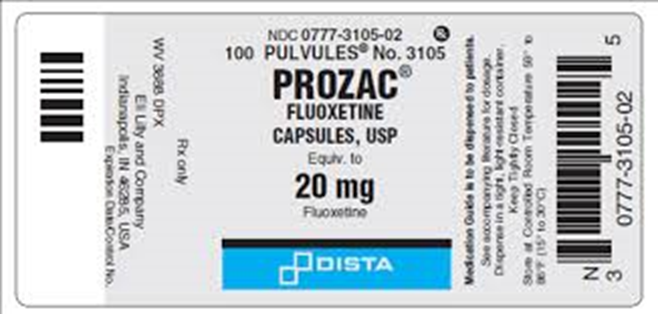
| HANOMORE 20 mg |
| Bell Laboratories, Inc. 4568 Fishing Lane Monterey, CA 93933 831 555 6899 |
| (ionotriptan succinate) |
| BELL LABORATORIES, INC |
DRUG ORIGIN
It is estimated that some 50 Million Americans suffer from migraines (1). Migraine headaches can be debilitating, and traditional pharmaceutical treatments have had limited success. Symptoms are thought to be caused by inflammation of cranial nerves and vasodilation in the brain. Triptans are vasoconstrictors that were first discovered in the early 1990s and are still widely used in the treatment of migraines. They not well absorbed through oral administration, and they can cause unpleasant side effect such as heavy chest, tingling and numbness (2). With limited relief from traditional treatments (including triptans), many migraine sufferers have resorted to using opioids, which cause dependency and other health risks (3).
After some success in previous trials involving notriptan, Bell Laboratories returned to the drawing board to design a new, more effective triptan with fewer side effects. It was discovered that when pairing the notriptan molecule with succinic acid, the result was a stable molecule with better bioavailability and receptor selectivity than any triptan on the market to date. Ionotriptan succinate is obtained from a reaction between the notriptan molecule and succinic acid (4).
DRUG NAMES
BRAND: HANOMORE
GENERIC: ionotriptan succinate
CHEMICAL: 3-[2-(dimethylamino)ethyl]-N-ethyl-indole5-methanesulfonamide succinate
DRUG STUDIES
STAGE 1 (preclinical investigation)
During initial lab trials, the ionotriptan succinate molecule was referred to as H34. The molecule was manufactured in small quantities for in vitro tests to study solubility and integrity. H34 was then formulated into a powdered form and administered at 5 mg/kg/day daily in food to 30 lab rats weighing between 1.5 kg and 2.5 kg for a total of 90 days. Ten of the rats were pregnant, in the first trimester. No mutagenic effects (birth defects) were observed in the offspring. After the primary rat study, the median toxicity effect in 20 non-pregnant rats was established at a dose of 40 mg/kg/day. Toxicity effects observed in 15 of the rats included erratic behavior, anxiety, anorexia, weight loss, vomiting and diarrhea. There were no carcinogenic (cancer-causing) effects noted at any dose. The therapeutic margin was determined by measuring serum levels in the rats two hours after administration of doses between 5 mg/kg/day and 20 mg/kg/day. The half-life of H34 was determined to be 10 hours. An IND application was filed with the FDA upon completion of Stage 1 studies, and we were cleared to proceed with clinical trials.
STAGE 2 CLINICAL TRIALS
PHASE I: A group of 60 healthy adults (not suffering from migraines) ranging from 25 years to 65 years in age was selected for the phase I trial and split into three groups receiving either 10 mg (group 1), 20 mg (group 2) or 30 mg (group 3) of ionotriptan succinate. Common side effects were noted as follows:
Group 1: 80% of participants had no side effects, 10% noted nausea and mild headache, 5% noted visual disturbances, 3% reported nausea and vomiting, 2% noted diarrhea
Group 2: 60% of participants had no side effects, 15% noted nausea and mild headache, 15% noted visual disturbances, 5% reported nausea and vomiting, 3% noted diarrhea, 2% reported chest pain.
Group 3: 40% of participants had no side effects, 20% noted nausea and mild headache, 20% noted visual disturbances, 10% reported nausea and vomiting, 10% noted chest pain
PHASE II: A cohort of 300 migraine sufferers (frequency of 4 per month or more) age 25-65 years were selected for the phase II trial and instructed to take ionotriptan succinate 20 mg upon onset of migraine. 55% of participants noted total relief of headache and nausea within 20 minutes of administration. 30% had some but not complete relief after 20-30 minutes of administration. The remaining 25% of participants had minimal to no relief 2 hours after administration of the drug. Common side effects (10%) included nausea, visual disturbance, diarrhea. Rare side effects (less than 1%) included chest pain and panic attacks. Three participants experienced anaphylactic symptoms and required emergency care.
PHASE III: A group of 3000 migraine sufferers (frequency of 4 per month or more) age 25-65 years were selected for the phase III double blind study and split into 3 groups. Group 1 received sumatriptan 6 mg oral tablet, group 2 received placebo and group 3 received inotriptan succinate 20 mg. Participants were instructed to medicate at onset of migraine.
Up to 45% of participants in group 1 reported moderate to complete relief of migraine symptoms and 40% reported side effects of nausea, diarrhea, chest pain and anxiety. Four participants were hospitalized with anaphylactic reactions.
At least 30% of participants in group 2 reported mild to moderate migraine relief with placebo. Common side effects (10% or more) included nausea, headache, diarrhea and anxiety.
Of group 3, 58% of participants noted complete migraine relief after 20 minutes of administration of ionotriptan succinate. Common side effects (25%) included nausea and mild diarrhea. 15% reported visual disturbances. 8% reported chest pain and anxiety. 0.5% experienced a significant raise in blood pressure (60 points systolic). Ten participants had anaphylactic reactions and required emergency treatment.
STAGE 3
Upon completion of clinical trials, an NDA application was filed with FDA. The drug was approved for marketing under the brand name Hanomore and generic name of ionotriptan succinate with Bell Laboratories owning the exclusive patent of 17 years.
DRUG CLASSIFICATION
Pharmacological classification: selective hydroxytryptamine/serotonin agonists
Therapeutic classification: anti-migraine agent, anti-inflammatory
Pregnancy class: C
MECHANISM OF ACTION
Ionotriptan succinate binds to 5-HT1 receptors in meningeal arteries and cranial nerves to cause vasoconstriction, leading to reduction in carotid arterial flow. Agonism of 5-HT1D receptors in the CNS also subdues the release of inflammatory substances during migraines (4).
PHARMACOKINETICS
Ionotriptan succinate 20 mg is supplied as a powder in a quick-dissolve capsule. The capsule dissolves within seconds of entering the stomach (when taken with food) and the drug is rapidly absorbed in the duodenum’s vascularity. 40% of the drug is metabolized in the liver, 20% becomes plasma protein bound and up to 40% remains bioavailable in the blood stream. The molecule is small enough to move uninhibited through the blood-brain barrier. The drug is water soluble and eliminated through the kidneys (4).
HALF LIFE
Serum drug levels of ionotriptan succinate are reduced by 50% at 10 hours after administration
AVAILABILITY
HANAMORE (ionotriptan succinate) 20 mg oral capsules
HANAMORE (ionotrpitan succinate) 5 mg/mL liquid for IV injection
INDICATIONS AND DOSAGES:
Common migraine: Administer one 20 mg capsule at onset of migraine. May repeat once after 2 hours. Maximum dose 40 mg in 24 hours. Take with food.
Severe intractable migraine: Administer 5-20 mg IV, do not exceed 20 mg in 24 hours
CONTRAINDICATIONS
Ionotriptan succinate has not been studied in children and adolescents under 25 years of age
Do not take with other triptans or anti-inflammatories
Do not take if allergic to ionotriptan succinate or other triptans
Not indicated for patients with ischemic coronary artery disease, history of cerebrovascular events or history of blood clots (4)
INTERACTIONS
Additive effect to serotonin reuptake inhibitors
May interact with anti-hypertensives
May cause vasospasm when administered with ergot-containing drugs
SIDE EFFECTS
Common: Nausea, diarrhea, visual disturbance
Occasional: Chest pain, anxiety
Rare: Hypertensive crisis
REFERENCES:
(1) https://migraine.com › migraine-statistics
(2) https://www.webmd.com/migraines-headaches/qa/what-are-the-side-effects-of-triptans-for-migraines
(3) https://americanheadachesociety.org/news/opioids-migraine/
(4) https://pubchem.ncbi.nlm.nih.gov/compound/Sumatriptan-succinate
SAMPLE PRESCRIPTION
| Monika Bell, MD 980 Fremont St Monterey, CA 9393 LIC: 126588 831 555-6556 DEA: DE5961974 |
| PATIENT NAME: Doe, John DATE OF BIRTH: 12/25/1985 sumatriptan succinate 20 mg take one capsule p.o. at onset of migraine may repeat once after 2 hours (not to exceed 2 doses in 24 hrs) dispense # 10 (ten) no refills PRESCRIBER SIGNATURE/TITLE: Monika Bell, MD DATE: 10/15/2019 |